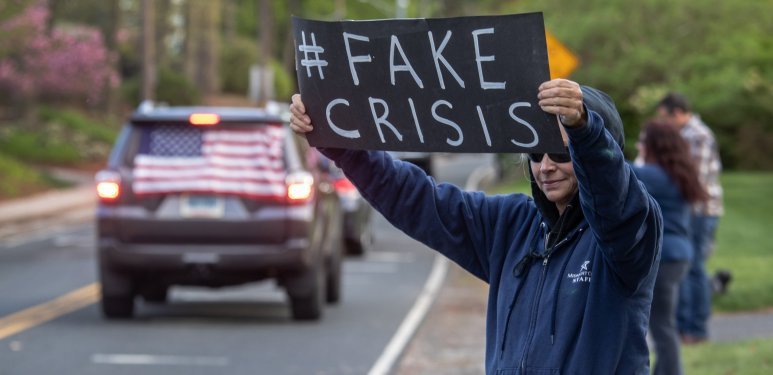


Rather than addressing the real root causes of societal problems, scapegoating pulls attention away from those causes to channel that resentment and frustration toward a perceived common enemy. This serves the purpose of not only deflecting legitimate accountability, but also of building solidarity among those uniting against that enemy.
Scapegoating exploits the human tendency to seek clear causes and identifiable culprits when faced with complex or unsettling situations. Rather than grappling with diffuse, systemic, or abstract explanations, audiences are often drawn to narratives that offer a concrete target to blame. Attribution bias - the tendency to misinterpret the causes of behaviors or events by overemphasizing either personal traits or external factors.
plays a key role by encouraging people to locate responsibility in a specific person or group, even when more complex underlying causes are more relevant.
At the same time, scapegoating taps into tribalism - a psychological mechanism in which people categorize themselves and others into groups, fostering loyalty and favoritism toward their ingroup while stereotyping or discriminating against outgroups.
by reinforcing social boundaries and strengthening group identity through opposition. Uniting against a shared "other" creates a sense of belonging and moral clarity, which can be emotionally rewarding regardless of whether the blame is justified or not. Fear, frustration, and anger often intensify this process by making scapegoating more emotionally compelling, helping bind the in-group together while pulling attention away from underlying causes.
This effect can be intensified by demonization, portraying the targeted group as not just problematic but inherently dangerous, immoral, or unworthy of trust. This can in turn foster a culture of fear and loyalty, where followers feel compelled to support the leader as a safeguard against the perceived threat.
Scapegoating commonly functions by redirecting blame from those in power to the powerless. The target is not chosen because it is necessarily responsible for society’s woes. The scapegoat is instead chosen because it is easy to victimize without fear of retaliation. In this way, monumental social issues can be pinned on select, blameless groups who are less understood by the majority due to their different customs and cultures.

Recently around the world, immigrants have been targeted for "taking jobs" or "draining public resources," helping unite the public behind demagogic leadership while deflecting attention from domestic policy failures that, if recognized and properly addressed, might actually improve the lives of everyday people.
During the Great Depression, Nazi propaganda blamed Jews for economic hardship and social instability, redirecting public anger away from the complex political and economic forces driving those problems. The success of this campaign helped consolidate Nazi power and lay the groundwork for what would ultimately become the Holocaust.
Politicians who effectively employ scapegoating are often celebrated for exposing the supposed injustices that have wronged the public for so long. By doing so, demagogues make themselves out to be not just champions of the people, but their saviors—an illusion that history has shown can be as dangerous as it is seductive.
Scapegoating is difficult to disarm because challenging it often strengthens the very dynamics that make it effective. Efforts to counter the technique may inadvertently draw more attention to the accusations, reinforcing their salience in the public mind even if they are demonstrably false—a phenomenon consistent with the continued influence effect - a cognitive phenomenon where misinformation persists in people's minds and continues to influence their beliefs, even after they recognize it has been debunked.
. This creates a self-reinforcing cycle in which attention remains fixed on the scapegoat rather than returning to the underlying causes of the problem. In this way, scapegoating turns the criticism itself into further evidence of the narrative.
Attempts to correct the narrative can also be perceived as defending the scapegoated group rather than addressing the underlying issue, triggering defensive reactions within the in-group. The emotional and tribal nature of scapegoating often provides a sense of unity and purpose for the in-group, as they bond over a shared "enemy."
When political leaders or media figures reinforce the scapegoating narrative, they raise the social cost of dissent, making silence or conformity feel safer than critical engagement. As a result, rebuttals are often interpreted not as factual corrections but as attacks on group identity, loyalty, or shared values, and as further proof that elites, outsiders, or sympathizers are protecting the supposed culprit.
Recognizing scapegoating requires noticing when channeling anger or frustration toward a group feels emotionally satisfying but does nothing to meaningfully resolve the issue at hand. Pay close attention to patterns of blame that target vulnerable individuals or groups, especially when evidence is weak, selective, or entirely absent.
Ask yourself: