


Named after the synthetic grass substitute, astroturfing is designed to create the illusion of grassroots consensus. Like fake grass, its seeming authenticity lies in its ability to look and feel organic. By simulating the appearance of widespread support, astroturfing can normalize views that might otherwise be widely rejected, making a controversial policy seem more credible and socially accepted than it actually is.
By exploiting herd mentality, astroturfing can shape public perception by creating the illusion that support is broader and more widespread than it actually is. Once this illusion takes hold, normative social influence - the tendency for individuals to adopt certain beliefs, behaviors, or actions because they perceive others are doing the same.
can further prompt individuals to adopt opinions or behaviors that align with the perceived majority.
Instead of persuading people through the strength of an argument, astroturfing seeks to create the impression that many others have already reached the same conclusion. This can be especially influential when people are uncertain or lack detailed knowledge about an issue. When that happens, the apparent opinions of others can serve as a shortcut for determining what is normal, popular, or socially acceptable.
The same dynamics that can encourage support for a cause can also be used to sow discord and deepen social divisions. By creating the mirage of consensus on both sides of a hot-button cultural issue, like defunding the police or gay marriage, astroturfers can leverage tribalism - a psychological mechanism in which people categorize themselves and others into groups, fostering loyalty and favoritism toward their ingroup while stereotyping or discriminating against outgroups.
to deepen existing divisions, intensify conflict, and further polarize public discourse.
In an age dominated by digital media, this impression—or false impression—of consensus can be easily amplified through social media. On these platforms, astroturfers build credibility by tapping into shared cultural experiences and identities. They create Facebook, Instagram, and Twitter/X accounts designed to appear as though they belong to ordinary individuals dedicated to a cause, only to later exploit that trust by injecting polarizing messages, propaganda, or disinformation into their followers' feeds.
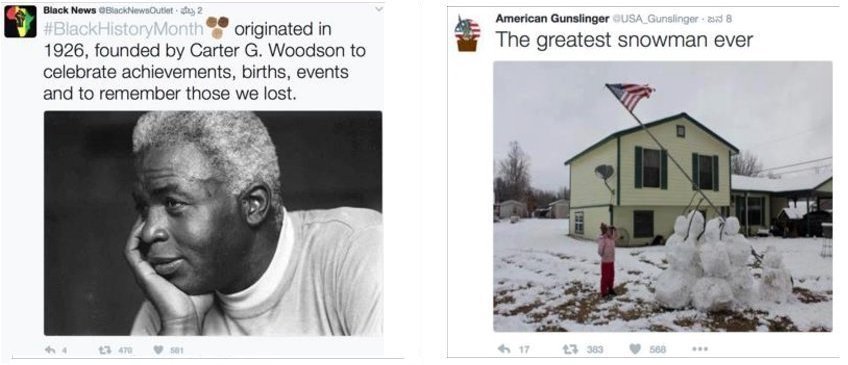 Russian-controlled Twitter/X accounts posing as authentic American voices:
@BlackNewsOutlet and @USA_Gunslinger.
Another fertile avenue for astroturfing is the comment sections of major news sites, blogs, and social media platforms. Posts appearing to come from “everyday” people are often carefully crafted by hired individuals, troll farms, or bots to mimic genuine public sentiment.
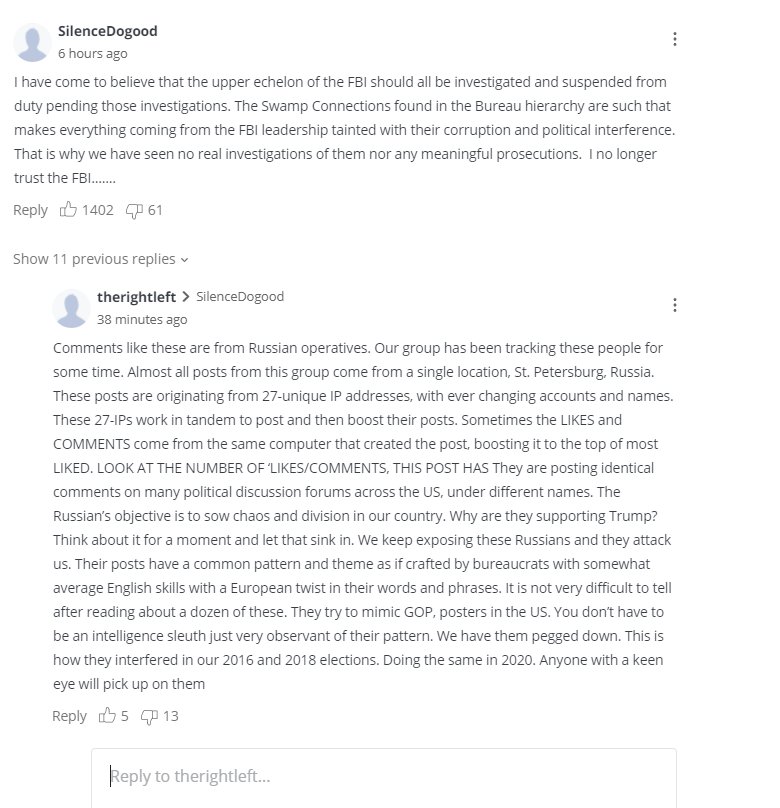 This post originated from a group using 27 unique IP addresses, all located in St. Petersburg, Russia.
Because comment sections are seen as unfiltered reflections of public opinion, they hold significant persuasive power. Readers may assume these posts represent the views of a broad audience, lending credibility to the content and reinforcing the perception of widespread agreement. By flooding comment sections with coordinated messaging, astroturfers further manipulate public perception, steering conversations and shaping opinions under the guise of organic discourse.
When a campaign successfully convinces people that a cause is popular, it can take on a life of its own to the point where individuals may begin wholeheartedly supporting it before fully evaluating its actual merits. As apparent support grows, increasingly driven by conformity bias - the tendency for individuals to adopt the beliefs, behaviors, or decisions of a group to fit in, even when these conflict with their own beliefs or convictions.
, individuals may become more willing to publicly align themselves with what appears to be a growing movement. Over time, this process can become self-reinforcing.
These public displays of support can also serve as a form of social signaling - the process by which individuals display behaviors, choices, or traits to communicate their identity, values, or social status to others.
. Sharing a post, displaying a yard sign, wearing a slogan on a t-shirt, or adding a hashtag to a profile can all signal affiliation with a cause. As more people engage in these behaviors, the movement can begin attracting supporters who perceive it as increasingly popular, legitimate, or socially accepted. As more real people join the movement and publicly express their support, the line between authentic grassroots enthusiasm and artificially generated consensus can become increasingly difficult to distinguish.
In the digital era, manufactured authenticity has become more influential, participatory, and harder to recognize. Large numbers of likes, shares, and comments do not necessarily indicate a grassroots movement. Understanding who is behind a message can be just as important as the message itself.
Ask yourself: